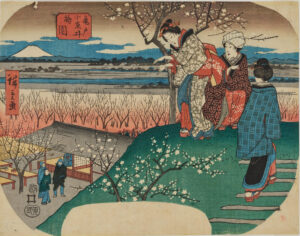
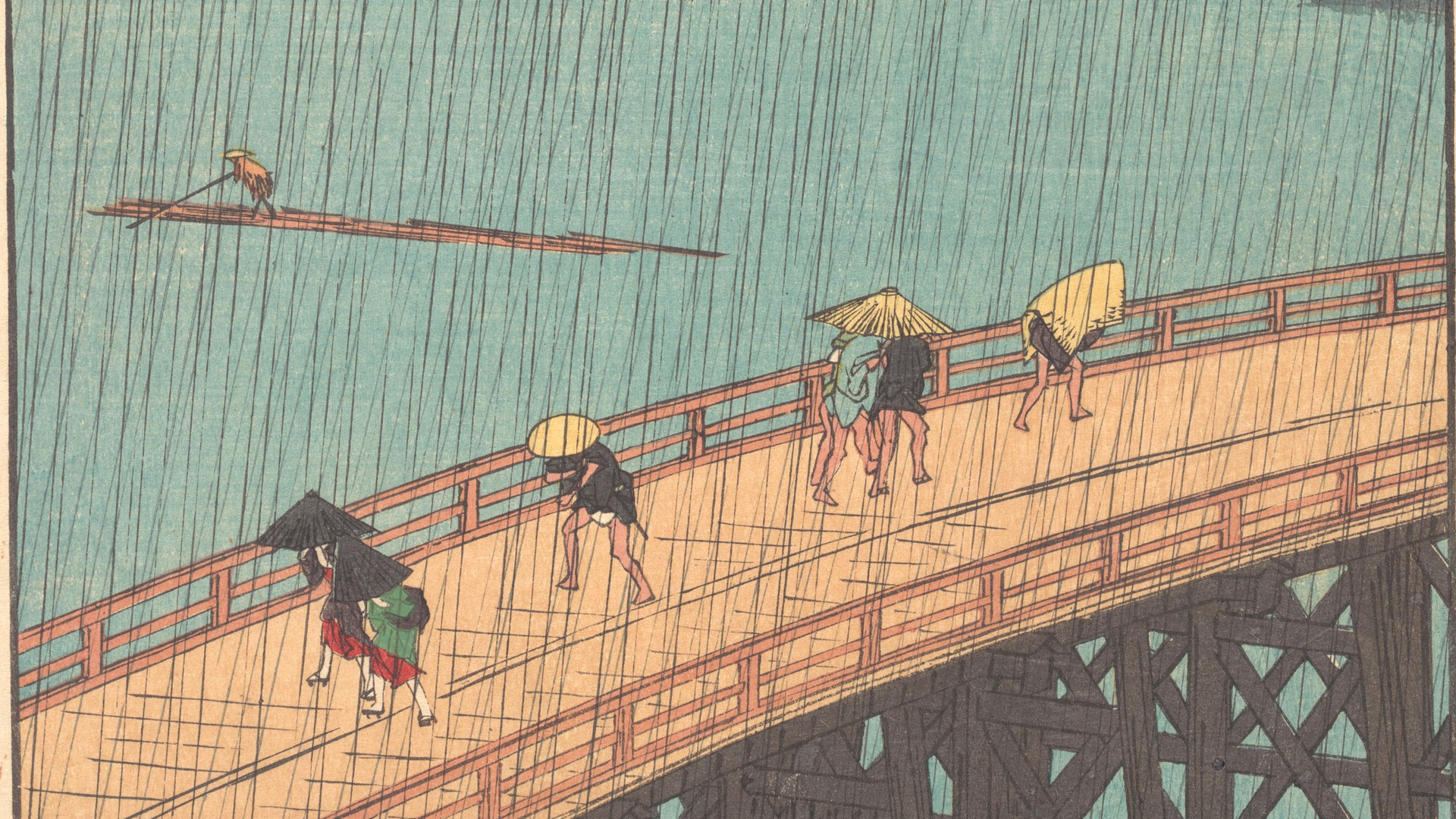
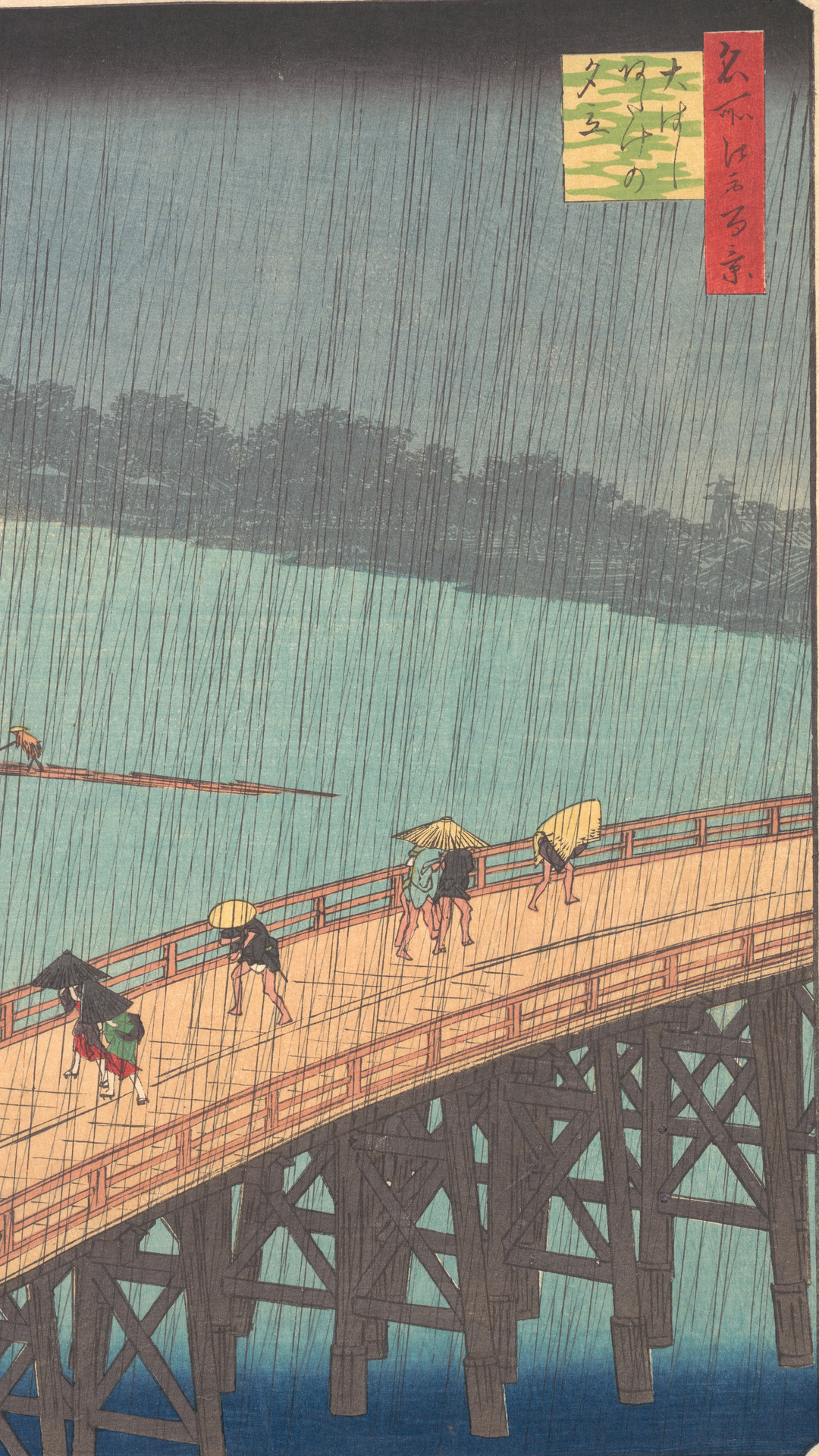
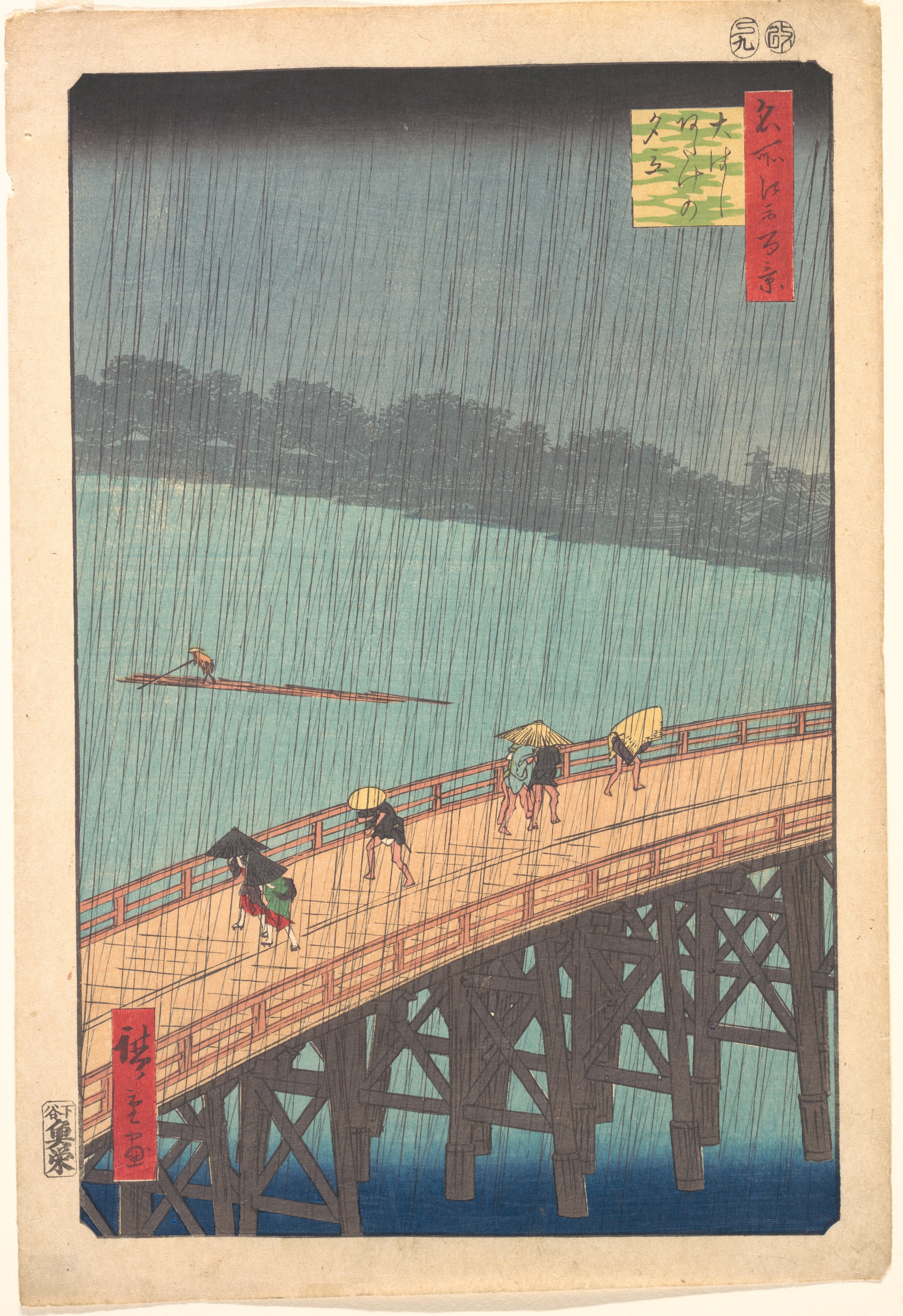
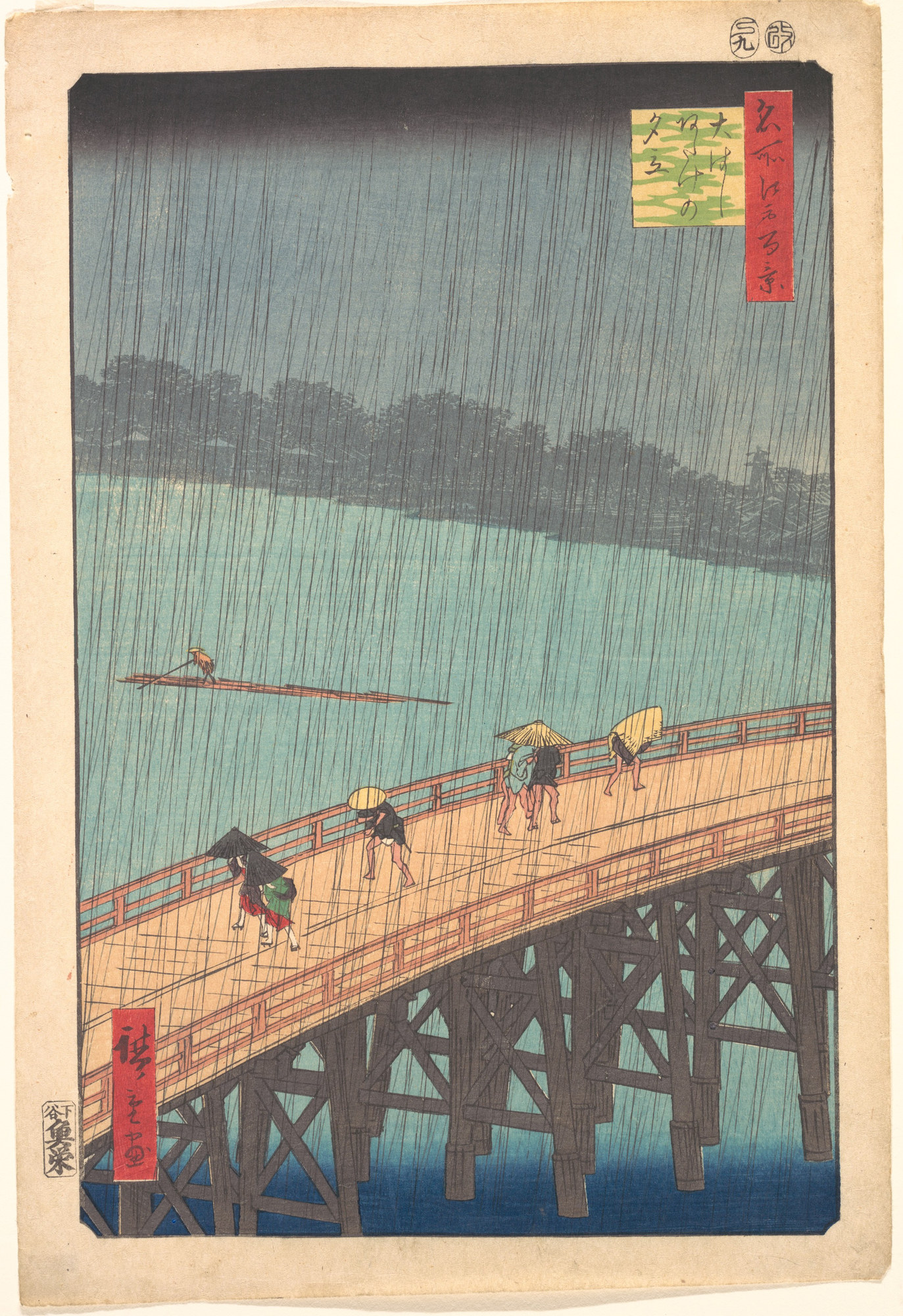
1. Sudden Shower over Shin-Ōhashi Bridge and Atake — Utagawa Hiroshige
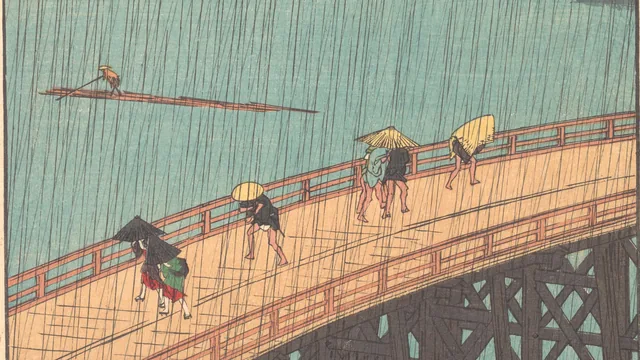 Desktop · 16:9
 Smartphone · 9:16
Download the full artwork (2650 × 3860 px, 3.0 MB)
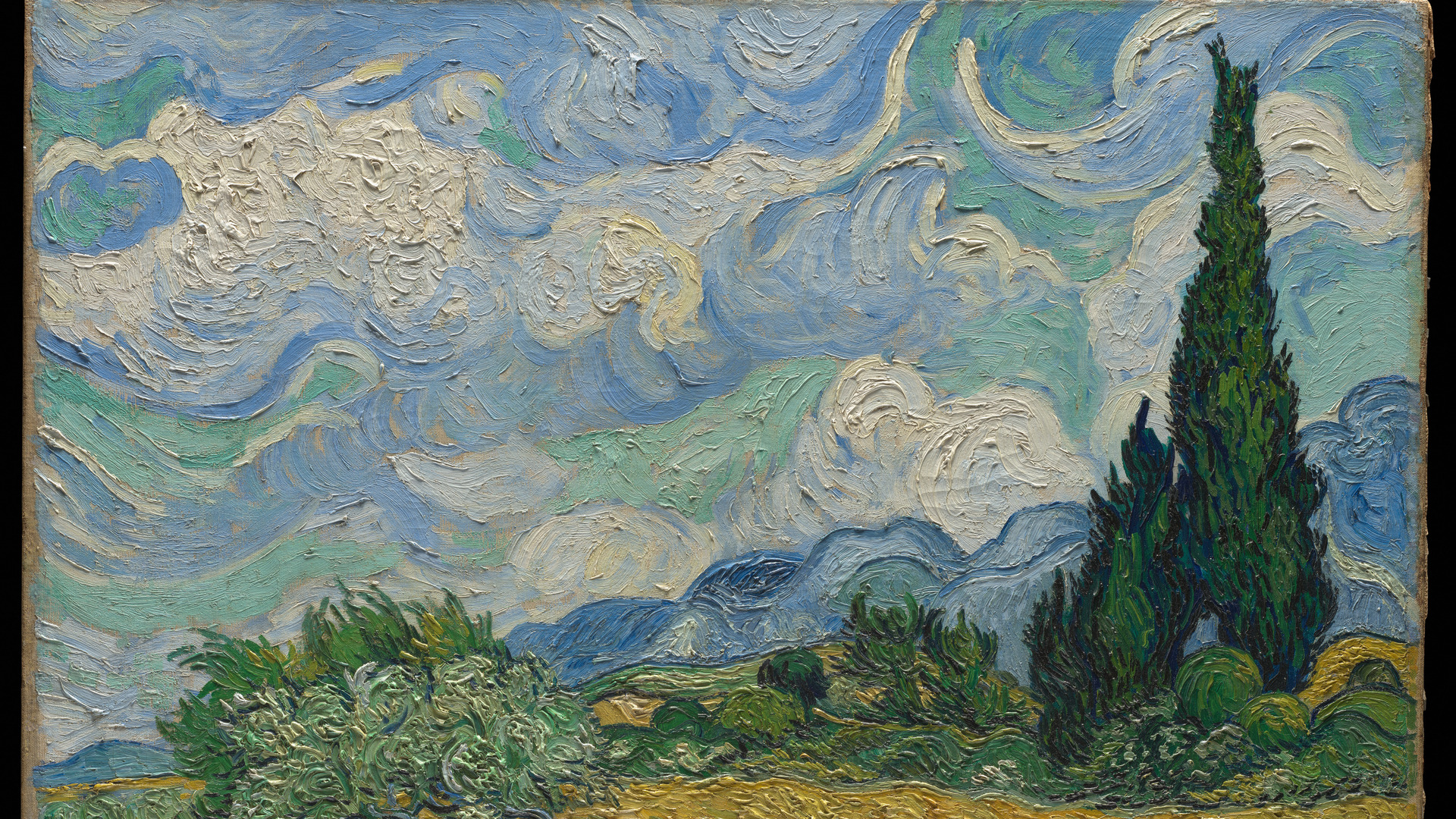
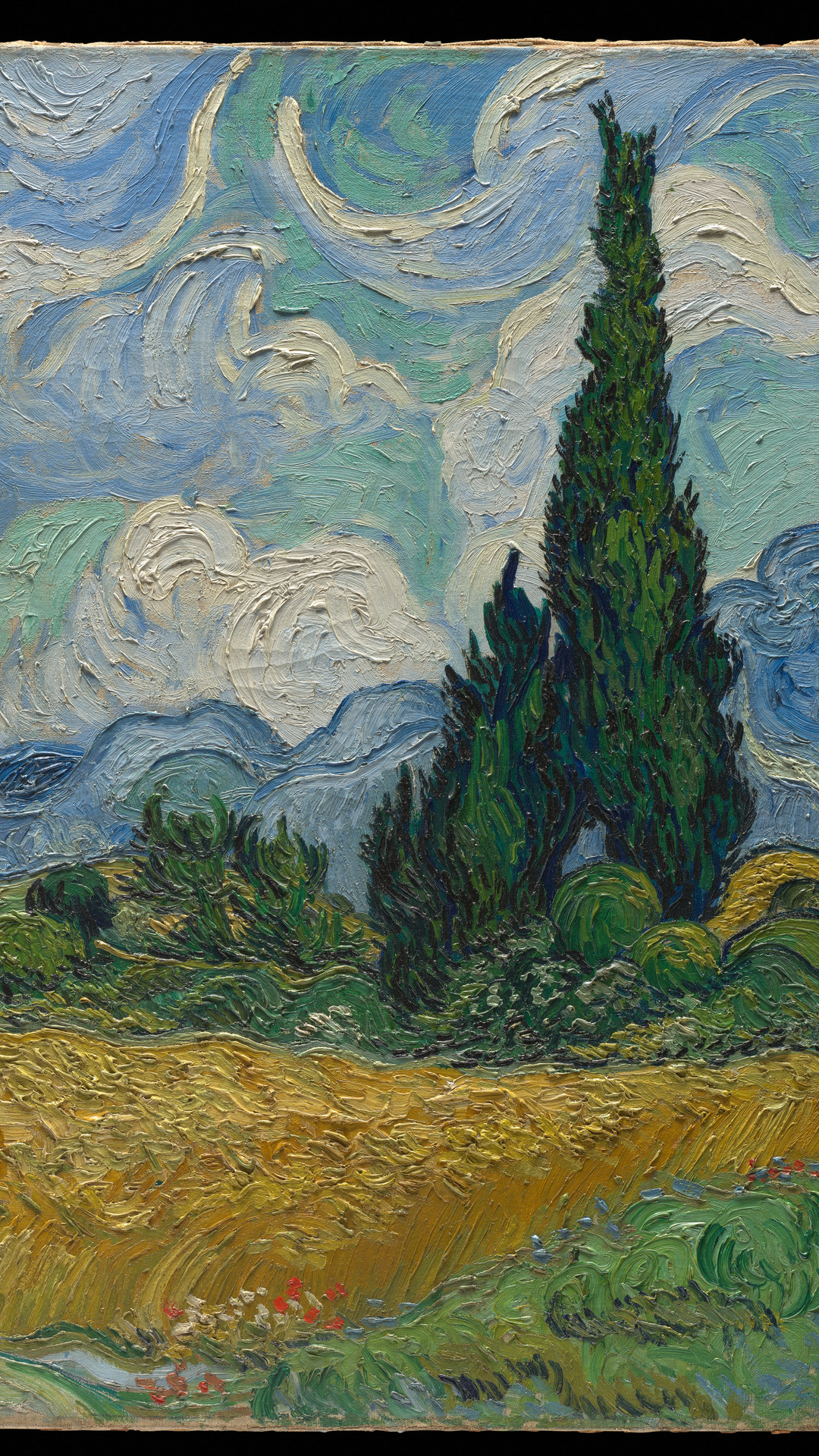
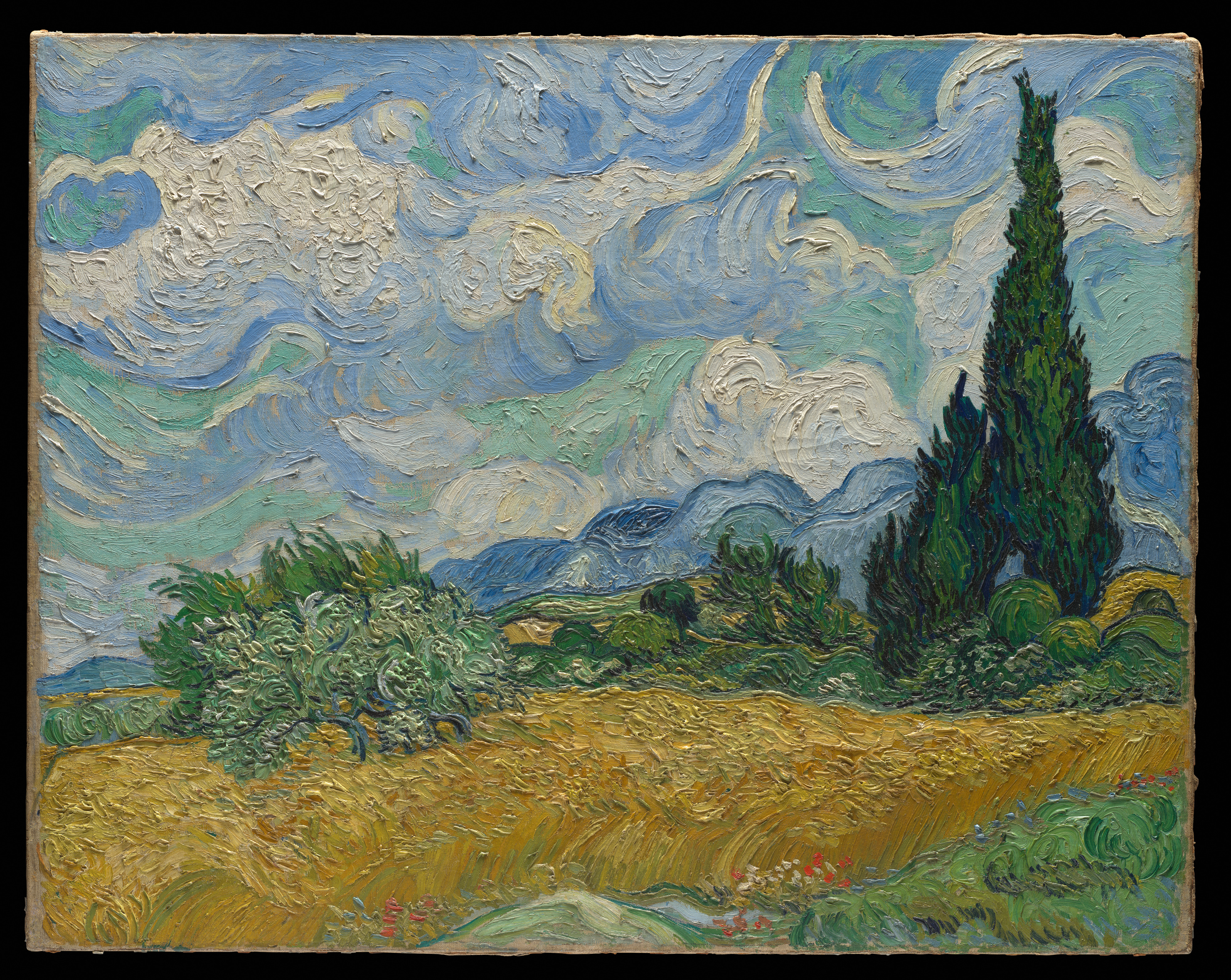
2. Wheat Field with Cypresses — Vincent van Gogh
 Desktop · 16:9
 Smartphone · 9:16
Download the full artwork (4000 × 3184 px, 8.3 MB)
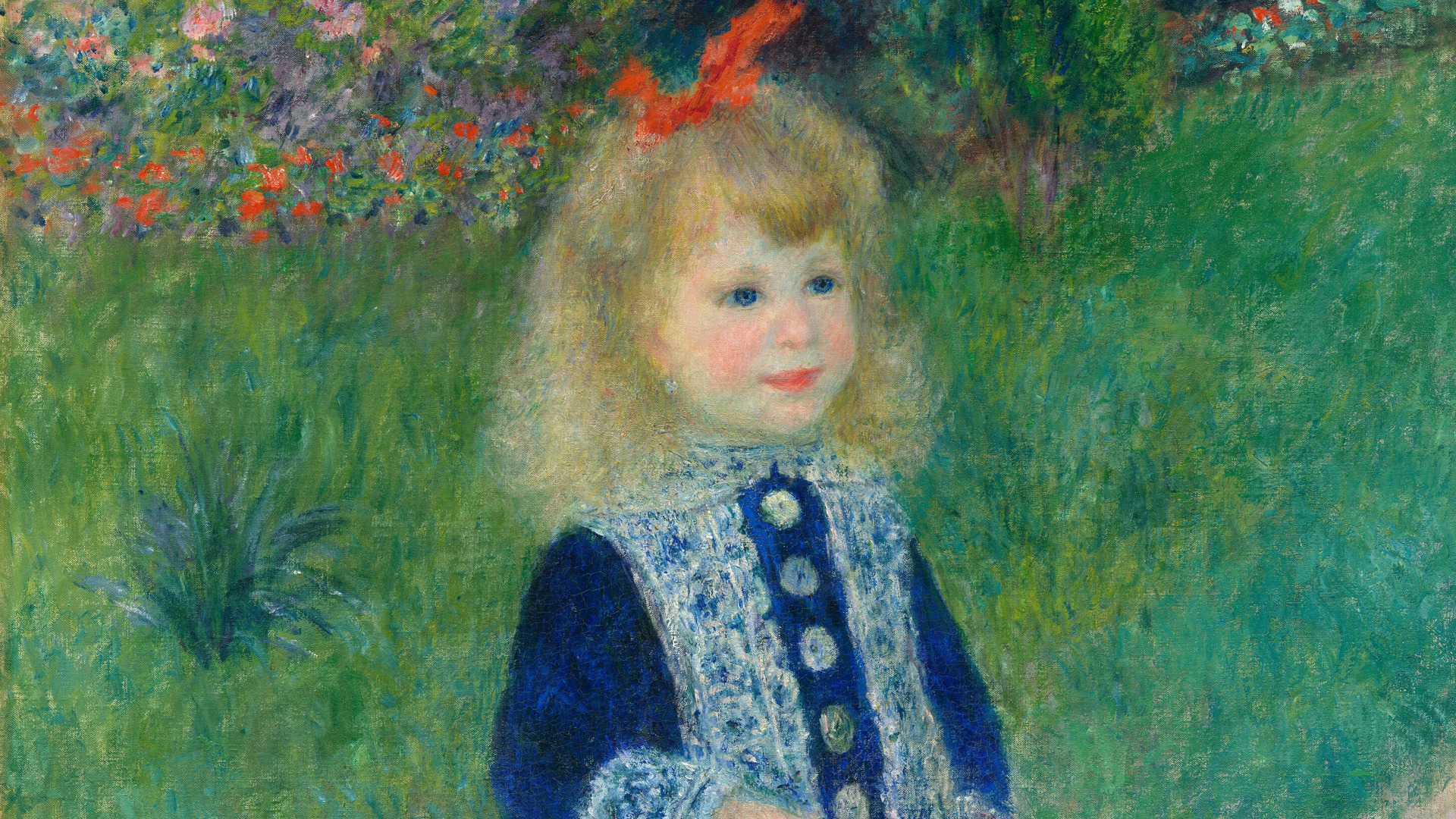
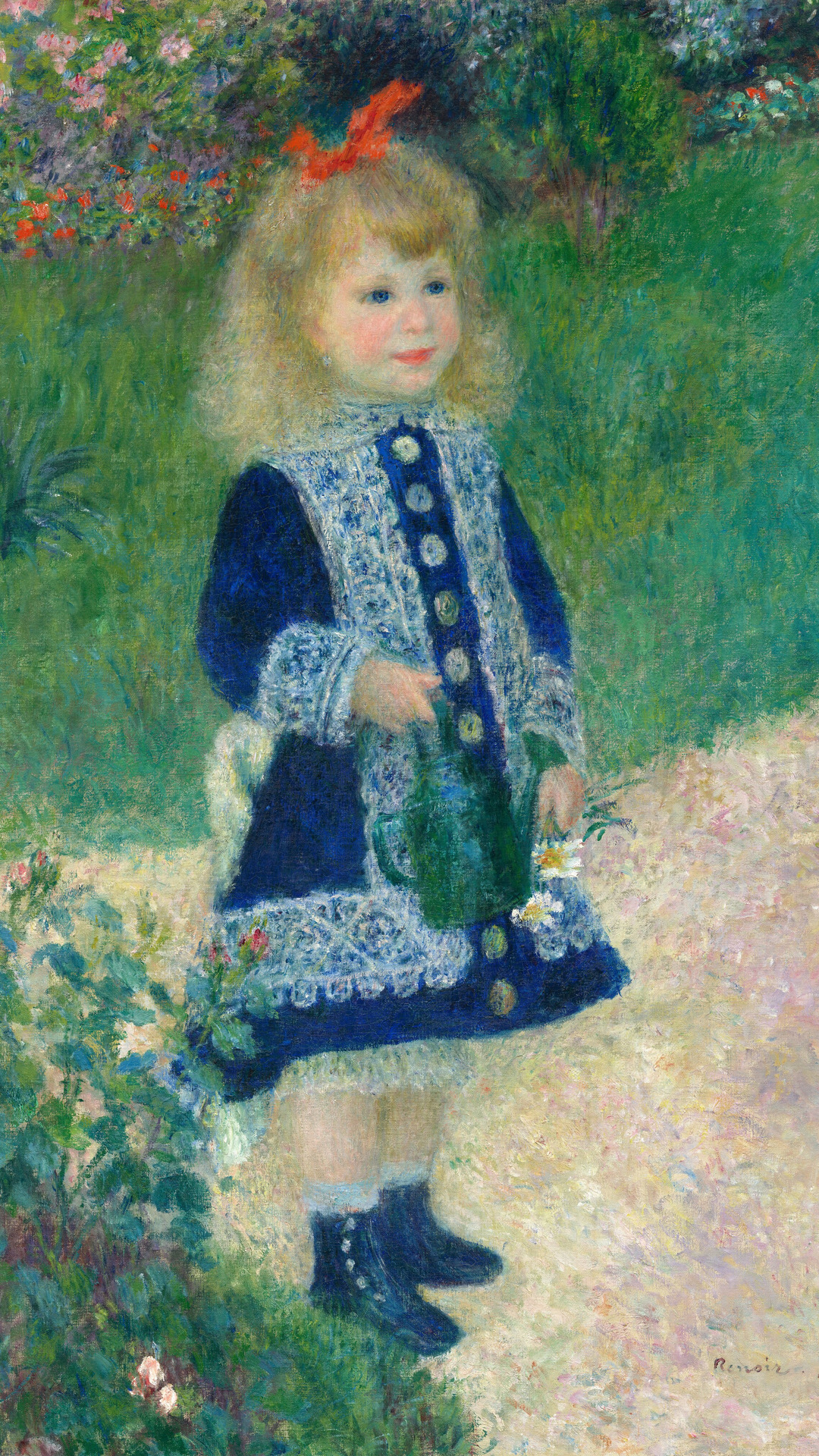
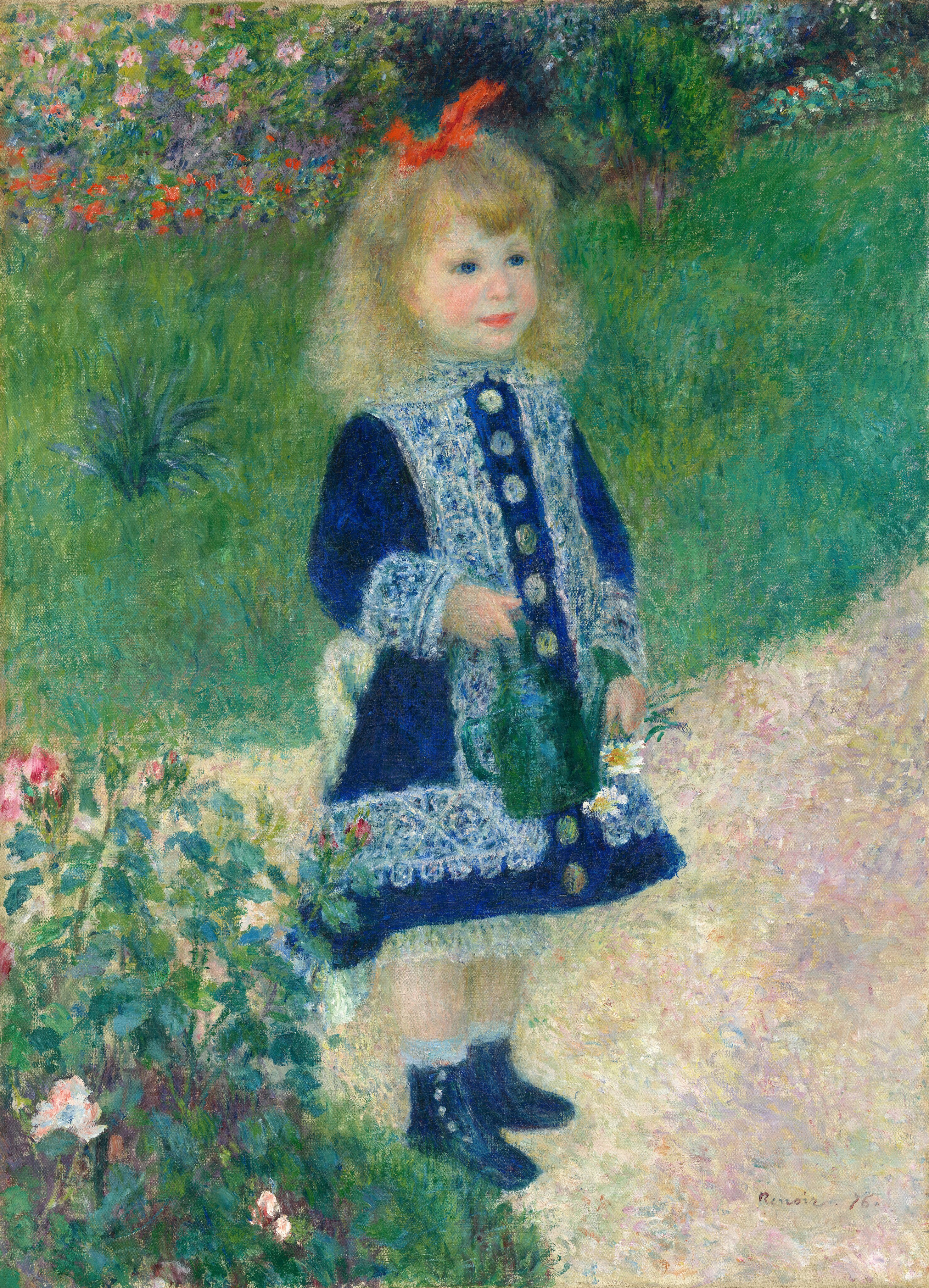
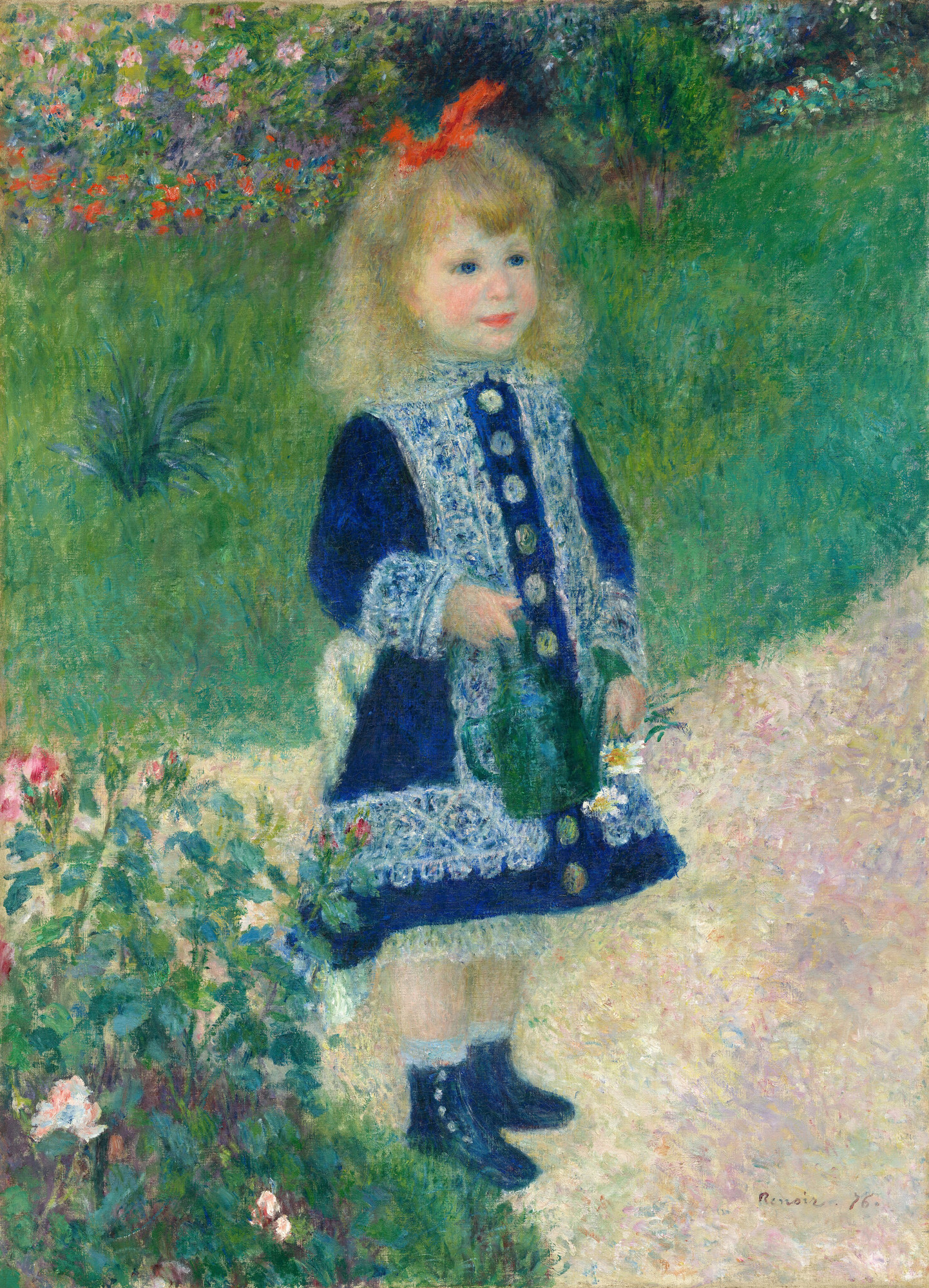
3. A Girl with a Watering Can — Auguste Renoir
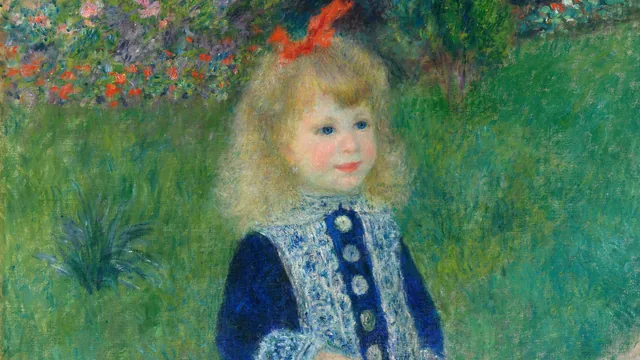 Desktop · 16:9
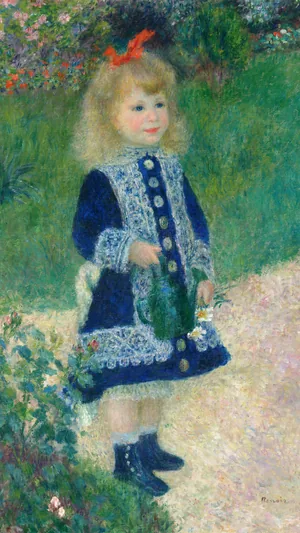 Smartphone · 9:16
Download the full artwork (2953 × 4096 px, 5.7 MB)
About the Works
Three public-domain masterpieces as free wallpapers for your desktop (16:9, 1920 × 1080) and smartphone (9:16, 1080 × 1920): Sudden Shower over Shin-Ōhashi Bridge and Atake by Utagawa Hiroshige, Wheat Field with Cypresses by Vincent van Gogh, A Girl with a Watering Can by Auguste Renoir. Each comes with the full original image, a short note on the work, and its collection, source and license.
1. Sudden Shower over Shin-Ōhashi Bridge and Atake — Utagawa Hiroshige
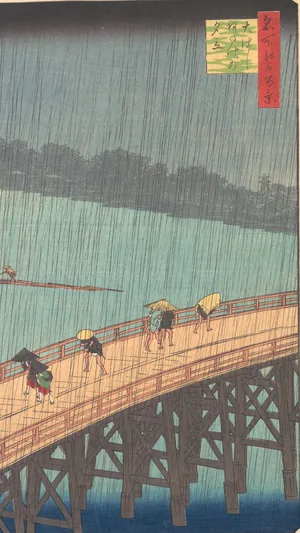
A sudden summer downpour sweeps over the Shin-Ōhashi, the “New Great Bridge” across the Sumida River in Edo, today’s Tokyo. People caught in the open hurry across the steep wooden span, bent under straw hats, two of them huddled beneath a single mat, while a lone raftsman poles his logs through the rain below. On the far bank, the Atake district fades into a gray silhouette.
Hiroshige designed this print in 1857 for One Hundred Famous Views of Edo, the great series of his final years. Its power lies in the rain itself: countless fine lines cut into the woodblocks and printed at two slightly different angles, so the shower seems to slant and shift as you look. A band of dark cloud, printed with soft gradation, presses down from the top, and the bold diagonal of the bridge, set high in the upright format, gives the quiet scene its sense of urgency.
The print was admired far beyond Japan. In 1887 Vincent van Gogh painted his own version of it in oil, Bridge in the Rain (after Hiroshige), one of the best-known examples of how Japanese prints inspired European artists.
| Title | Sudden Shower over Shin-Ōhashi Bridge and Atake (Ōhashi Atake no yūdachi), from the series One Hundred Famous Views of Edo (Meisho Edo hyakkei) |
|---|---|
| Artist | Utagawa Hiroshige, Japanese, Tokyo (Edo) 1797–1858 Tokyo (Edo) |
| Date | 1857 |
| Medium | Woodblock print; ink and color on paper |
| Dimensions | Oban 13 3/8 x 9 1/2 in. (34 x 24.1 cm) |
| Collection | The Metropolitan Museum of Art, New York, JP2522 |
| Credit | The Howard Mansfield Collection, Purchase, Rogers Fund, 1936 |
| Image source | The Metropolitan Museum of Art, New York |
| License | CC0 1.0 (Met Open Access) |
2. Wheat Field with Cypresses — Vincent van Gogh
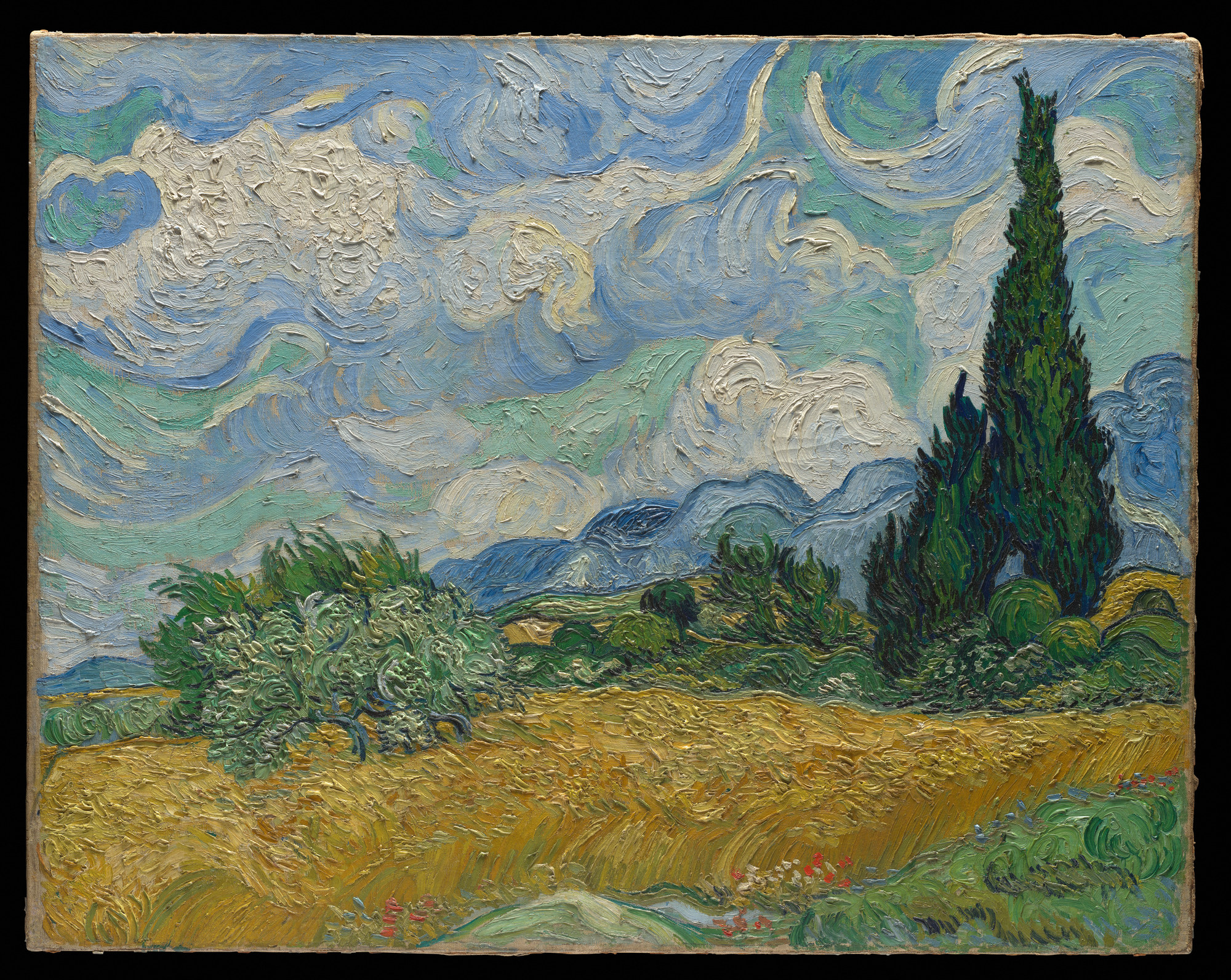
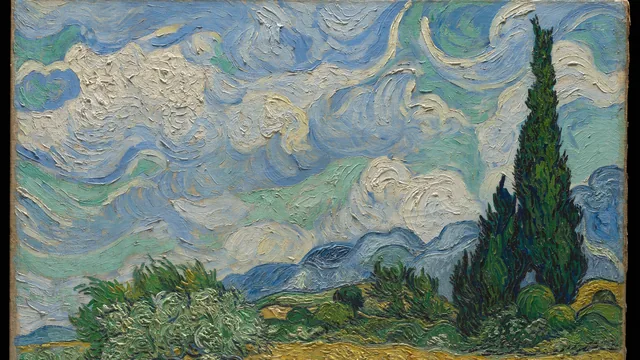
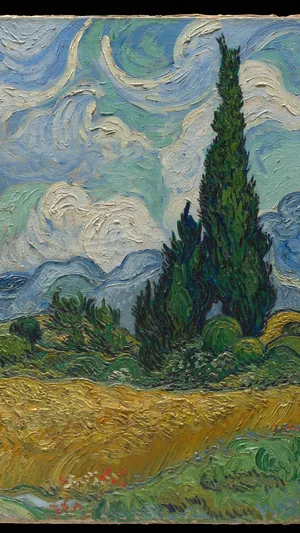
Under a bright, windswept sky, a field of ripe yellow wheat stretches across the foreground of this landscape. On the right, a tall, dark cypress tree rises like a flame. Smaller olive-green trees, low blue hills and curling white clouds fill the distance.
Vincent van Gogh painted the scene in 1889 near Saint-Rémy-de-Provence in the south of France, where he was staying at an asylum. He laid the paint on thickly, so the brushstrokes stand up from the canvas. Every part of the picture seems to move: the wheat sways, the clouds swirl and the cypress twists upward.
People admire the painting because it turns an ordinary stretch of countryside into something full of energy and feeling. Van Gogh valued the composition highly enough to paint further versions of it, and this canvas is counted among the finest landscapes from his time in Provence.
| Title | Wheat Field with Cypresses |
|---|---|
| Artist | Vincent van Gogh, Dutch, Zundert 1853–1890 Auvers-sur-Oise |
| Date | 1889 |
| Medium | Oil on canvas |
| Dimensions | 28 13/16 × 36 3/4 in. (73.2 × 93.4 cm) |
| Collection | The Metropolitan Museum of Art, New York, 1993.132 |
| Credit | Purchase, The Annenberg Foundation Gift, 1993 |
| Image source | The Metropolitan Museum of Art, New York |
| License | CC0 1.0 (Met Open Access) |
3. A Girl with a Watering Can — Auguste Renoir
A little girl stands on a garden path, holding a small watering can. She wears a dark blue dress with a white lace collar, and a red bow sits in her fair hair. Around her, the garden is full of flowers and leafy green plants, and the path curves away behind her into the sunlight. Her round face and steady gaze give the picture a quiet, gentle mood.
Auguste Renoir painted this canvas in 1876, when he and his friends were developing the style later called Impressionism. He laid on paint in short, feathery strokes of bright color. Up close the flowers and leaves dissolve into dabs of paint, and from a distance they come together as a lively, shimmering garden. He gave the girl’s face and hands softer, smoother handling, so she stands out clearly from the busy setting.
The painting is admired for the way it joins a tender portrait of a child with the Impressionist interest in outdoor light and color. It shows Renoir’s warm, affectionate view of everyday life.
| Title | A Girl with a Watering Can |
|---|---|
| Artist | Auguste Renoir, French, 1841 – 1919 |
| Date | 1876 |
| Medium | oil on canvas |
| Dimensions | overall: 100 x 73 cm (39 3/8 x 28 3/4 in.) framed: 125.7 x 97.5 x 6.9 cm (49 1/2 x 38 3/8 x 2 11/16 in.) |
| Collection | National Gallery of Art, Washington, 1963.10.206 |
| Credit | Chester Dale Collection |
| Image source | National Gallery of Art, Washington |
| License | CC0 1.0 (NGA Open Access) |